I see this pattern on almost every new account we onboard. The campaigns are running. Spend is going out. And TikTok is stuck in learning phase, or ROAS is sliding with no clear explanation.
Most of the time, the fix isn't in the campaign settings. It's in what TikTok can see.
Here's what I've found causes TikTok optimization to fail, in order of how often I actually see it.
How TikTok's algorithm is supposed to work
TikTok's learning system requires roughly 50 conversions within the first seven days of a campaign to exit the learning phase and stabilize delivery. During those seven days, the algorithm explores broadly, testing different audiences to find who actually converts.
The mechanism depends entirely on conversion data flowing back to TikTok. Every purchase, every add-to-cart, every initiate-checkout teaches the algorithm something about your real buyers. When that data is incomplete or missing, TikTok keeps learning — just from a distorted picture.
Understanding this makes the seven failure modes below much more predictable.
7 reasons TikTok ads aren't optimizing
1. TikTok isn't receiving all your conversions
This is the most common cause I see, and the least visible.
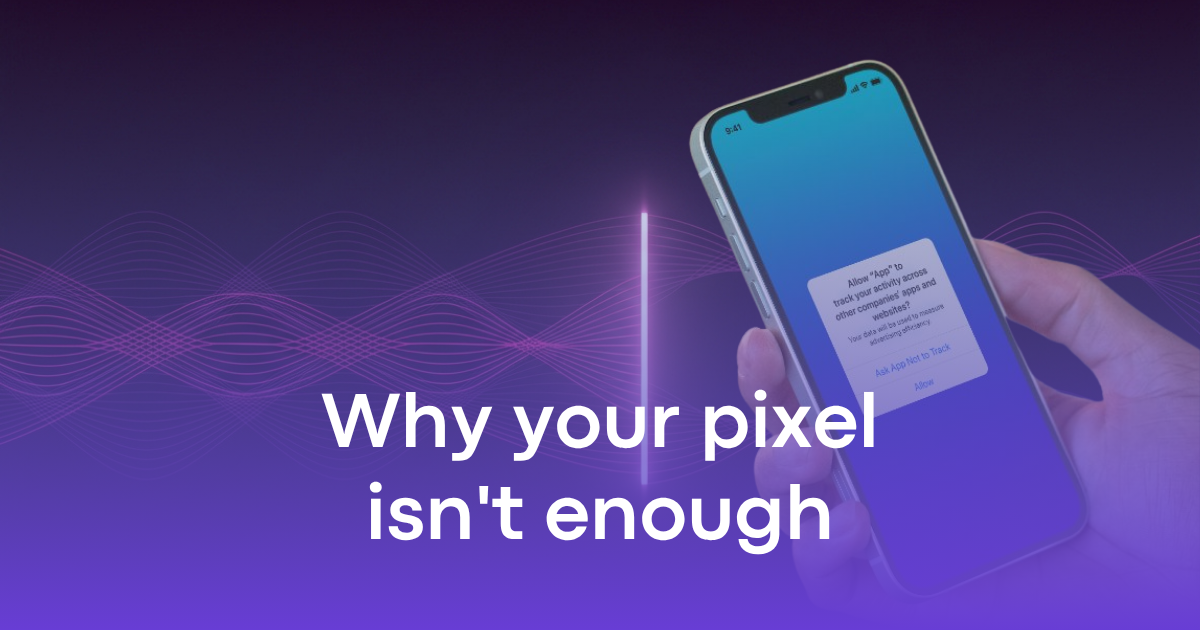
Browser privacy settings, iOS App Tracking Transparency, and ad blockers all prevent the TikTok pixel from firing on a significant share of purchases. If your brand does meaningful volume on Safari or iOS, you're likely missing 20 to 35% of conversions before they ever reach TikTok.
The algorithm then builds its buyer model from that incomplete data. It optimizes toward the customers it can track, which may not represent your actual best buyers at all.
The fix is server-to-server tracking via the TikTok Events API. Events sent server-side bypass browser restrictions entirely. This is the foundation everything else depends on.
2. The campaign is stuck in learning phase
Learning phase requires roughly 50 conversions in seven days. If your daily conversion volume can't support that threshold at your current budget, the campaign never exits learning.
You can see this in TikTok Ads Manager under the Delivery column of your ad group. Campaigns stuck in learning show unpredictable CPA and ROAS that swings day to day without pattern.
This isn't a bug. It's the algorithm doing exactly what it was designed to do. It just hasn't received enough data to finish.
3. Daily budget can't support enough conversions
This is a math problem. If your target CPA is $30 and your daily budget is $60, you'll accumulate two conversions a day at most. Over seven days that's 14 conversions, well below the 50 TikTok needs.
TikTok recommends setting daily budgets at a meaningful multiple of your target CPA. Enough to generate the conversion volume the learning phase requires within the window.
4. Targeting is too narrow for the algorithm to learn
Tight targeting feels precise but often starves the algorithm. When your audience is under one million users, TikTok has limited room to explore and find meaningful patterns in buyer behavior.
Broad targeting, starting with just location and age, often performs better than narrow interest-based targeting. TikTok's algorithm frequently identifies buyer signals that manual targeting misses. You can narrow later once the campaign exits learning and stabilizes.
5. Creative isn't competitive in the auction
TikTok's ad auction weighs engagement signals heavily. Ads with low likes, comments, and shares lose auctions consistently, even at competitive bids. Fewer auction wins mean fewer impressions. Fewer impressions mean fewer conversions. Fewer conversions mean the learning phase never completes.
Native-looking vertical video consistently outperforms polished, produced ads on TikTok. Testing three to five creatives from launch gives the algorithm more signals to find what resonates, rather than depending on a single asset to do all the work.
6. Bid strategy doesn't match the conversion goal
Optimizing for clicks when you want purchases trains TikTok to find clickers, not buyers. The algorithm delivers exactly what you ask for.
If purchase volume is too low to support purchase optimization early on, stepping back to AddToCart as the optimization event helps the campaign build momentum. Switch to purchase optimization once conversion volume is sufficient.
A bid cap set too low is another common issue. If the cap prevents TikTok from winning enough auctions to accumulate conversions, the learning phase never completes regardless of how long the campaign runs.
7. Campaign edits during learning phase reset everything
Every significant edit resets the learning clock. Budget changes above 20%, audience adjustments, creative swaps, bid strategy changes — all of them restart the seven-day window. Accumulated learning is lost.
The temptation to edit when day-three CPA looks high is strong. But editing mid-learning almost always extends the problem. The algorithm was still exploring. Now it starts over.
Let campaigns run the full seven days before evaluating performance. The data you see during learning is not representative of what stabilized delivery will look like.
What to check before changing anything
Compare Events Manager to your backend
Open TikTok Events Manager and look at purchase event volume for the past seven days. Compare to actual orders from your commerce platform.
A 10% gap is within normal range. A 30% gap means TikTok is learning from a severely incomplete picture of your buyers. That gap is the starting point for any real fix.
Check your match rate
Your match rate appears in Events Manager under your Events API connection. Below 50% indicates significant matching failures. Events are arriving but TikTok can't connect them to user profiles and can't use them for optimization.
Check for deduplication issues
If you're running both a pixel and Events API without a shared event ID, TikTok is counting the same purchases twice. Event deduplication matters because inflated conversion counts distort optimization. TikTok thinks campaigns perform better than they do, then makes spending decisions based on that inflated picture.
Fix the signal before you fix the campaign
Most teams troubleshoot creative, budget, and targeting when performance drops. Those are the visible levers. But if the conversion signal is broken, adjusting those levers changes nothing fundamental. You're optimizing a system that cannot see.
Baytonia saw +80% ROAS on TikTok after implementing proper server-side tracking. Same campaigns. Same budgets. Same ads. The only change was what TikTok could see.
Before touching your campaign settings, verify your signal. Everything else is downstream of that.
→ How ad signal infrastructure improves Meta, TikTok, Snap, and Google ROAS
→ What is ad signal infrastructure and why does it matter
FAQs
How long does TikTok's learning phase last?
Seven days from when the ad group starts delivering, provided it reaches roughly 50 conversions within that window. If it doesn't hit that threshold, it stays in learning indefinitely.
What is a good match rate for TikTok Events API?
Strong implementations reach 70 to 90%. Higher match rates mean TikTok can attribute more events to specific users, which improves optimization accuracy and reduces wasted spend.
Does server-side tracking improve TikTok ad performance?
Server-side tracking sends conversion data directly to TikTok without relying on browser-based pixels. This restores conversions that would otherwise be blocked by privacy tools. Brands implementing server-side tracking via the Events API typically see meaningful ROAS improvement as TikTok relearns from more complete data.
What is the minimum daily budget for TikTok ads to optimize?
Set daily budgets at a meaningful multiple of your target CPA. For a $30 CPA target, the budget needs to be high enough to support the conversion volume required to exit learning within seven days.